
Online store project showcase
A production-focused Next.js storefront for catalog discovery, checkout, account flows, payments, content pages, and operational readiness. The real project pairs a Vercel storefront with a separate AdminJS runtime and shared PostgreSQL data model.
Next.js 16
storefront app router
3
responsive showcase views
SSG
portfolio page rendering
Full commerce flow, from catalog to checkout
This portfolio page is a static showcase. It presents the storefront's purpose, responsive UI, and implementation scope without depending on live backend data. The underlying store project includes catalog browsing, cached search autocomplete, product reviews and ratings, checkout with live coupon codes, cart and wishlist actions, auth-aware state, admin-editable content pages, observability, deployment documentation, and production integrations with PostgreSQL, Stripe, Resend, Vercel, and a separate AdminJS service.
Static showcase boundary
This portfolio page uses local content and static screenshot assets. It does not call the store database, payment APIs, auth service, or admin runtime.
Screenshots
Responsive storefront previews
Swiper-based screenshots show the same store concept across desktop, tablet, and smartphone frames. Open any preview for a larger lightbox with arrow and swipe navigation.

Desktop homepage and catalog navigation
Dark-theme homepage with sidebar catalog, hero banners, and localized navigation for the storefront.
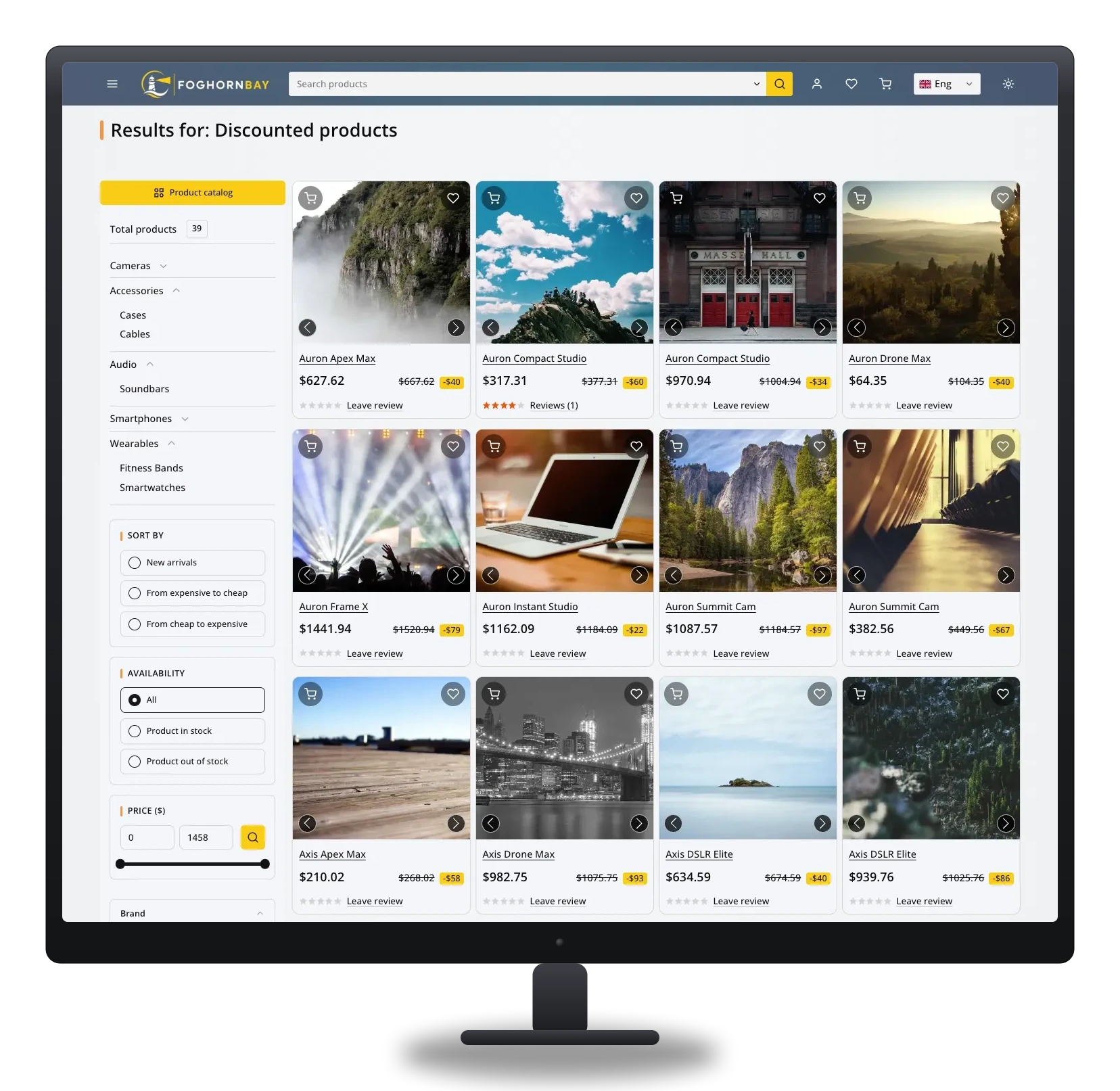
Desktop search results and filtering
Light-theme search results with category tree, sort controls, and pagination across the product catalog.

Desktop product detail page
Product gallery, variant selection, pricing, and payment/delivery info blocks for detailed product exploration.
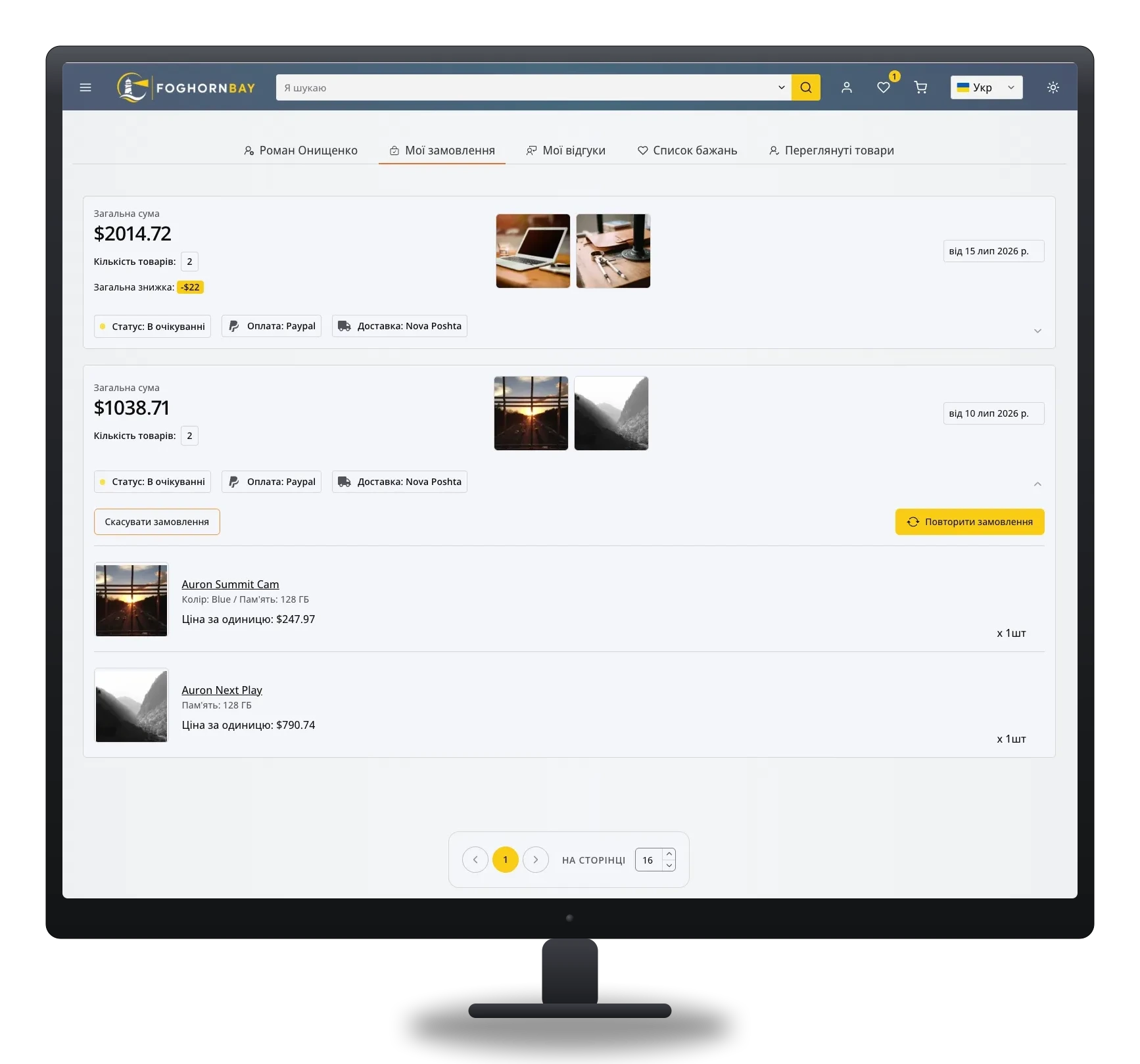
Desktop account order history
Localized order history with status, payment method, and delivery details for each past order.
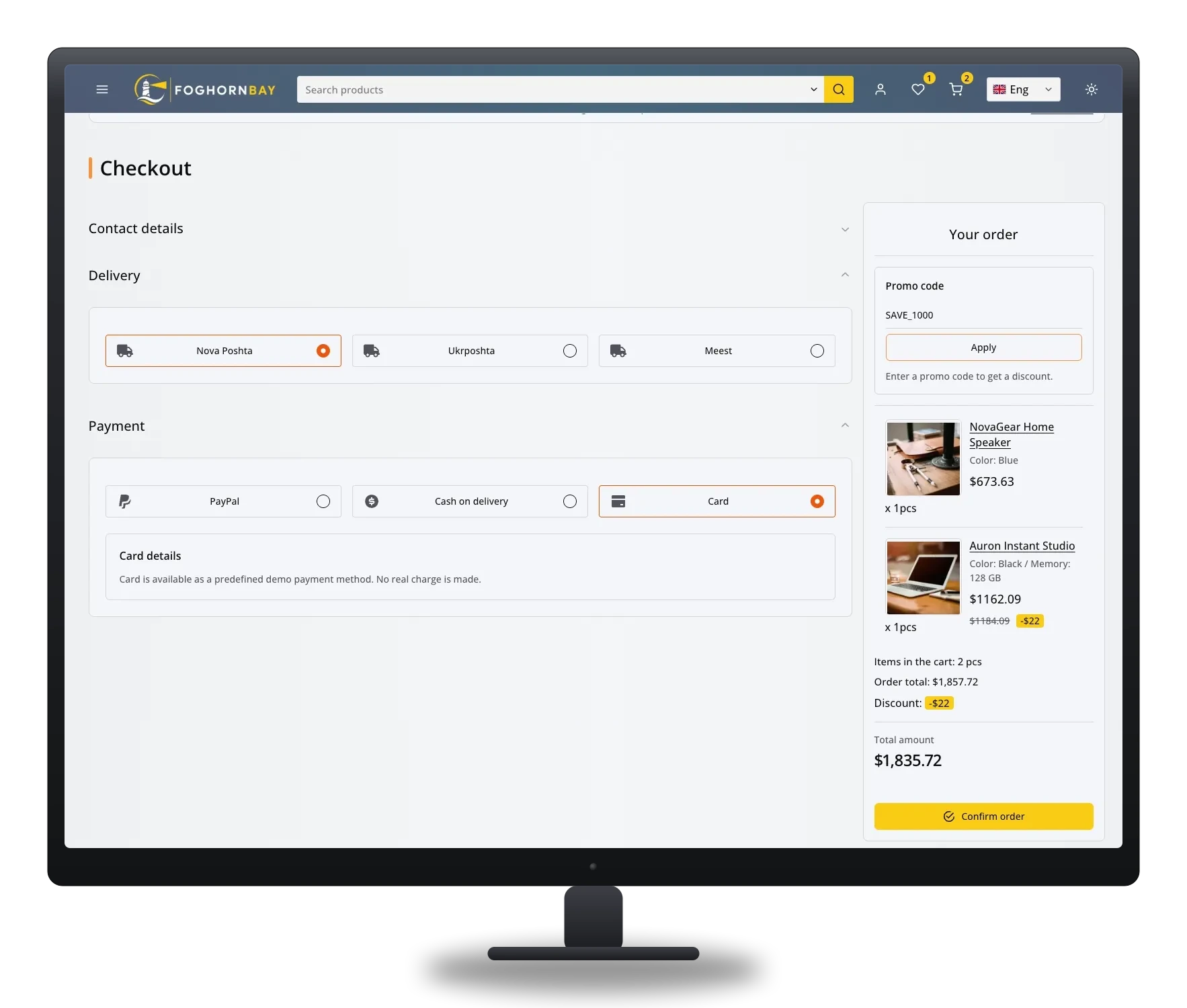
Desktop checkout flow
Delivery and payment method selection alongside a live order summary with promo code support.
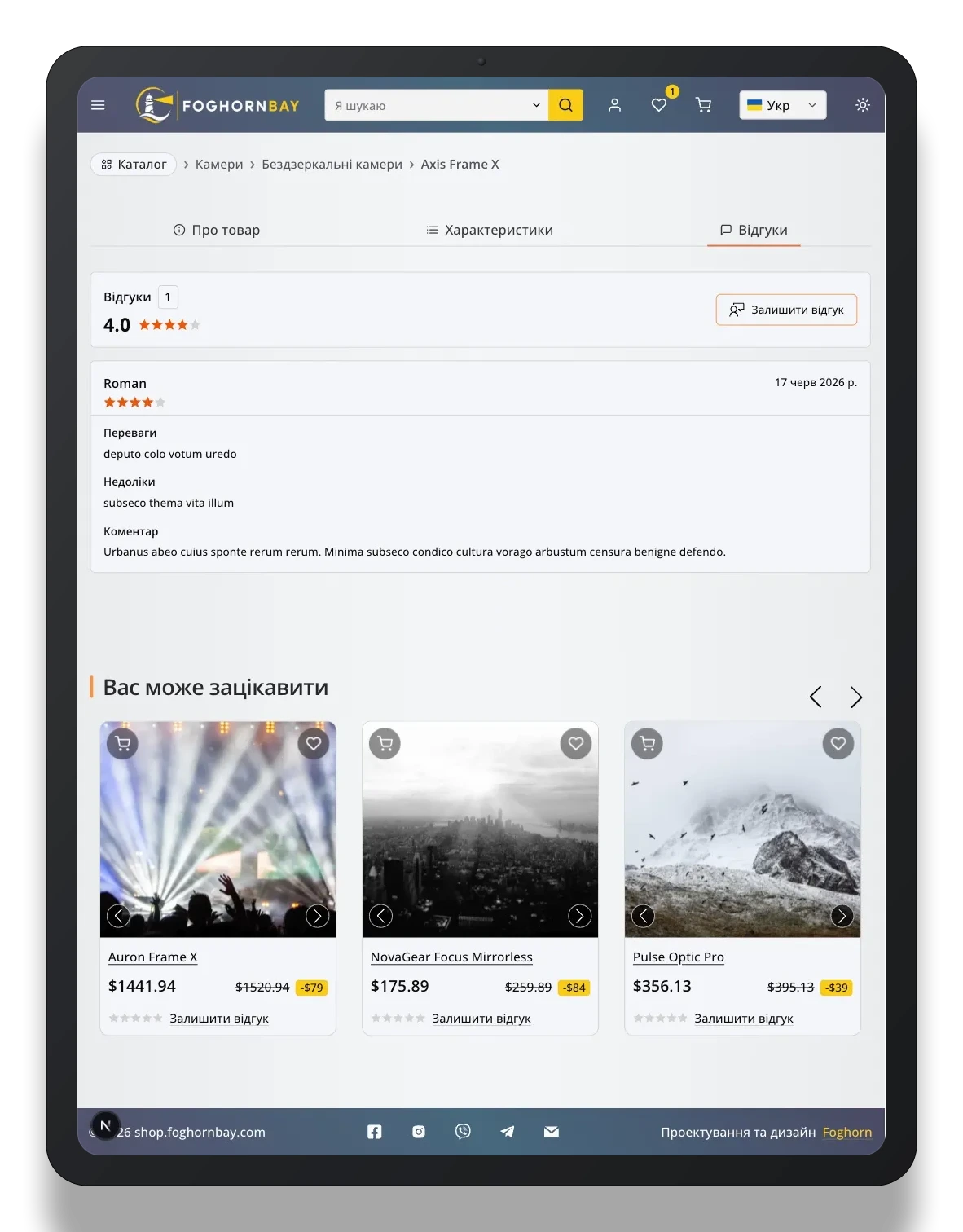
Tablet product reviews
Localized product reviews tab with star ratings and related product recommendations.
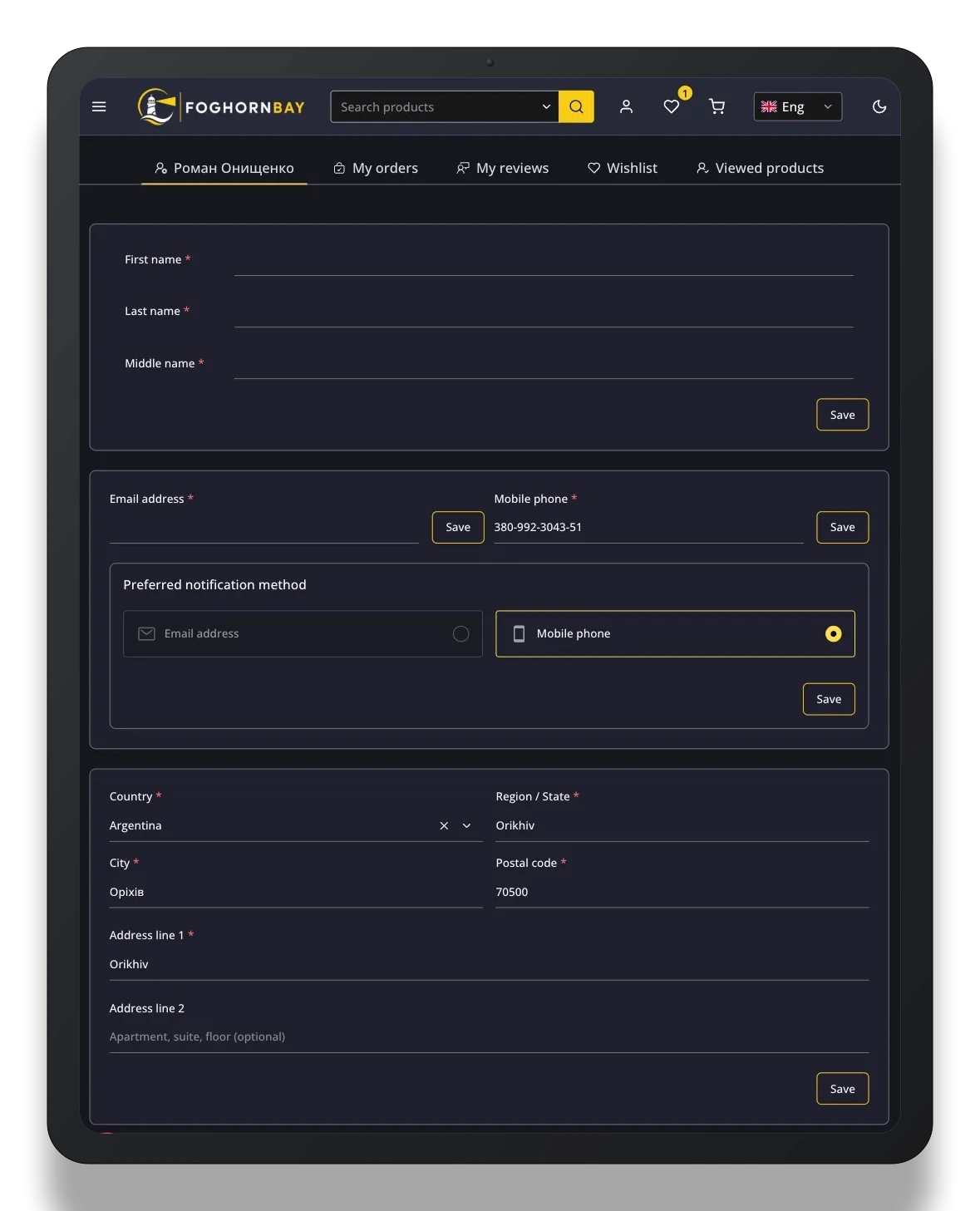
Tablet account profile settings
Editable profile, contact, and address forms in the customer cabinet, adapted for mid-size screens.
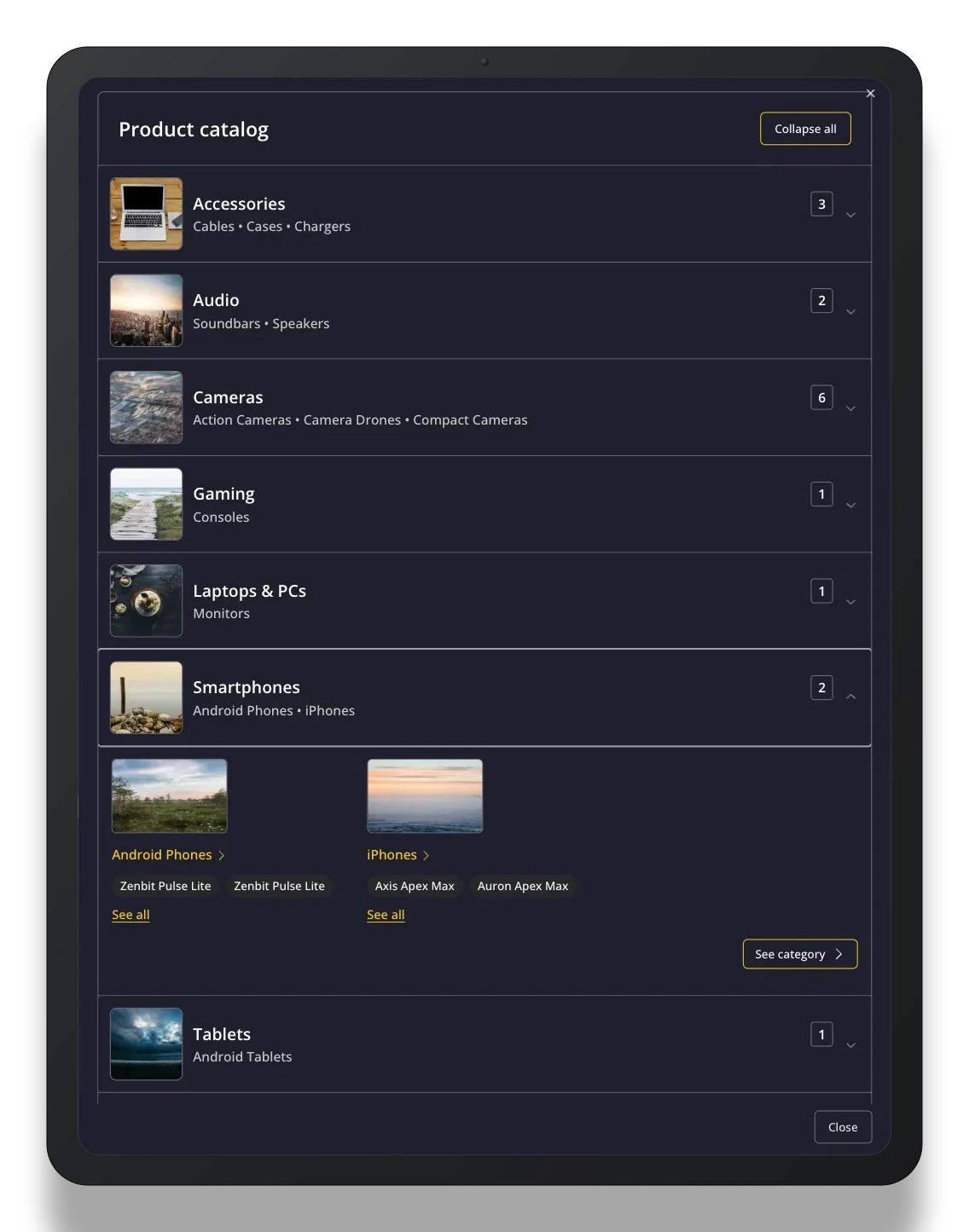
Tablet catalog navigation menu
Expandable category mega-menu with product counts and quick links for touch-friendly browsing.
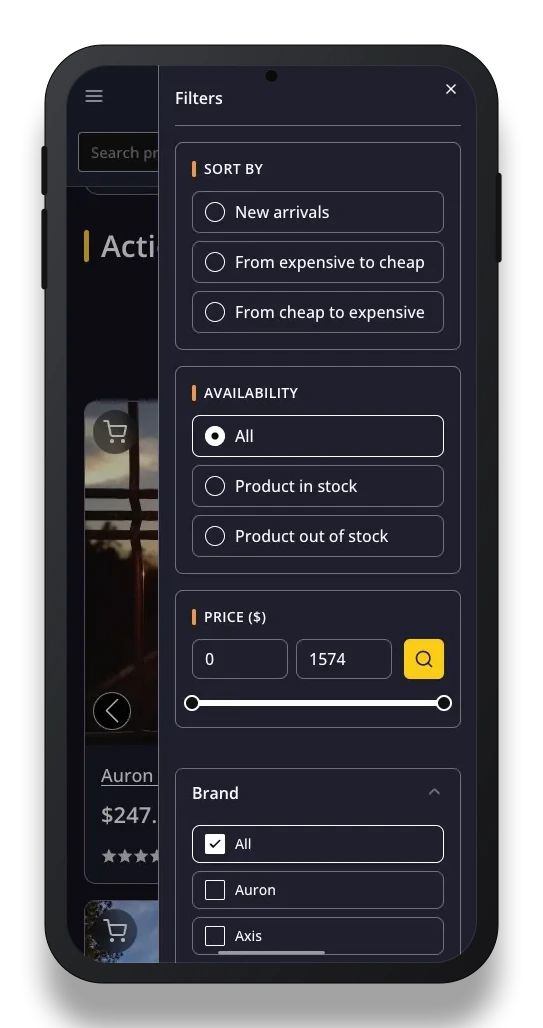
Smartphone filter panel
Sort, availability, price range, and brand filters in a compact slide-in panel for small screens.
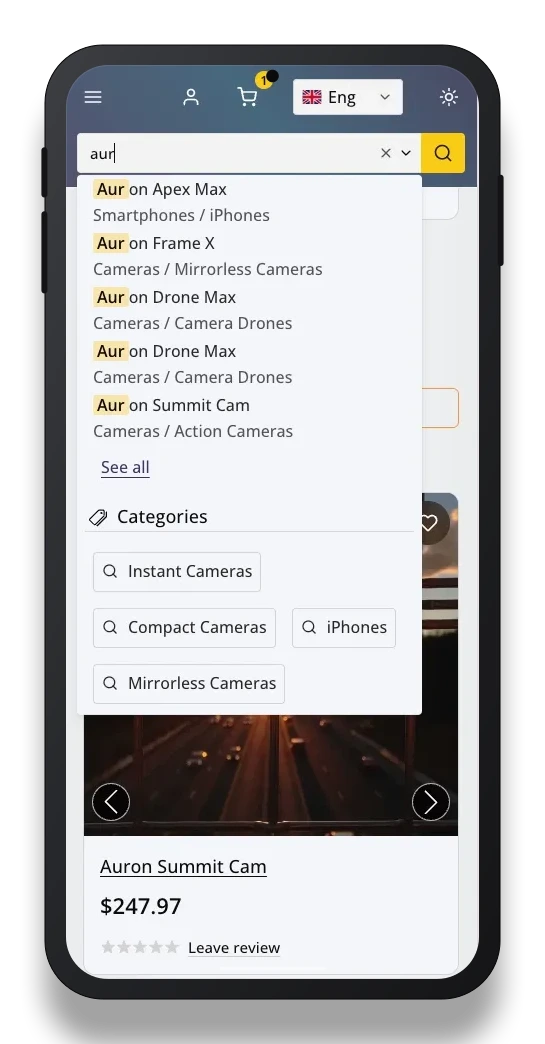
Smartphone search autocomplete
Live search suggestions with matching products and categories as the shopper types.
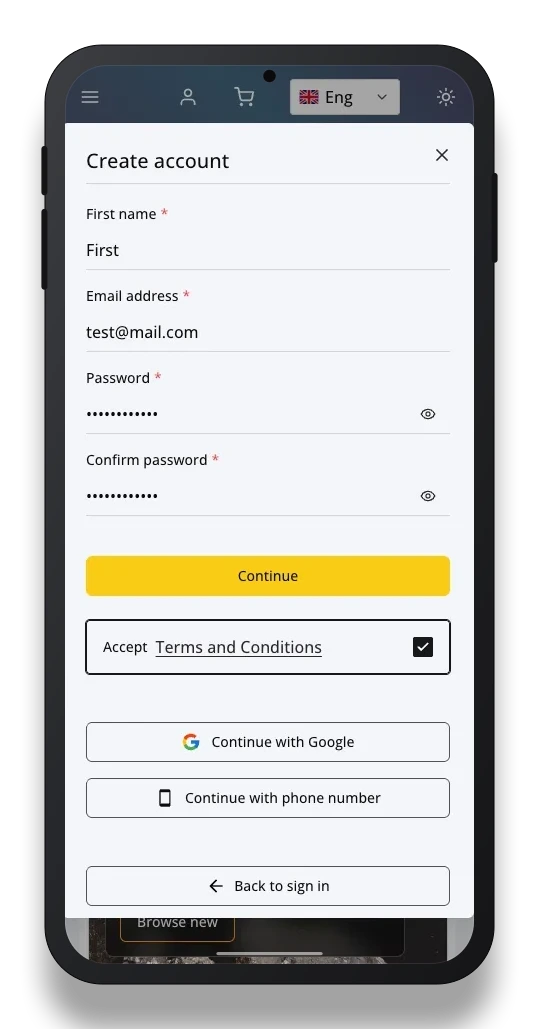
Smartphone account registration
Compact sign-up form with social and phone-number continuation options for fast onboarding.
Capabilities
Features and technologies
Core storefront implementation, technologies used, and additional capabilities available for discussion — from mid-level enhancements to advanced commerce features.
Reviews and star ratings already ship today, live on every product page. This adds a verified-purchase badge so shoppers can see at a glance which reviews came from a real, completed order.
Coupon codes with usage limits and expiry dates are already live. This adds quantity-based bulk discounts and a hard spend ceiling per campaign, both configurable from the admin panel without touching code.
Allow purchases without requiring an account. Shoppers track their orders by email and see a gentle prompt to register afterward, lowering the checkout barrier without sacrificing conversion data.
Shoppers subscribe to instant alerts when a product returns to stock or drops in price, bringing them back to the store at exactly the right moment with minimal marketing effort.
Carrier name and tracking number are already visible in order history today. This replaces the static field with a live-polling integration against the carrier’s own tracking API, reducing "where is my order" support tickets significantly.
Shoppers select up to four products and review a side-by-side table of specs, features, and prices, making the final purchase decision faster and more confident.
A timed email sequence automatically follows up with shoppers who left items in their cart, recovering lost revenue with personalized reminders and no manual effort from the team.
Curated bundles, frequently-bought-together suggestions, and checkout upsell prompts increase average order value without feeling intrusive, driven by product relationship data.
Sell digital files, software licenses, or e-books alongside physical goods. Buyers receive a secure, time-limited download link immediately after purchase confirmation.
The store already keeps one saved shipping address per account. This expands it to multiple labeled addresses plus stored payment methods, so returning customers can check out in a single click.
Reward repeat buyers with points they earn on every purchase and can redeem on future orders. Tier badges encourage higher spending and strengthen long-term brand loyalty.
Prices are automatically shown in the visitor's local currency based on geolocation, with a manual currency switcher for users who prefer a different display.
Today's search matches on product names and translations, with cached autocomplete for speed. This upgrades it to understand shopper intent rather than just keywords — surfacing relevant products even with varied phrasing — with personalized ranking based on browsing history.
Expand the platform to multiple independent sellers, each with their own product management dashboard, configurable commission rules, and automated payout routing to their accounts.
Want to discuss an ecommerce build like this?
The contact page will open with an online-store subject pre-filled so you can jump straight to describing your project.